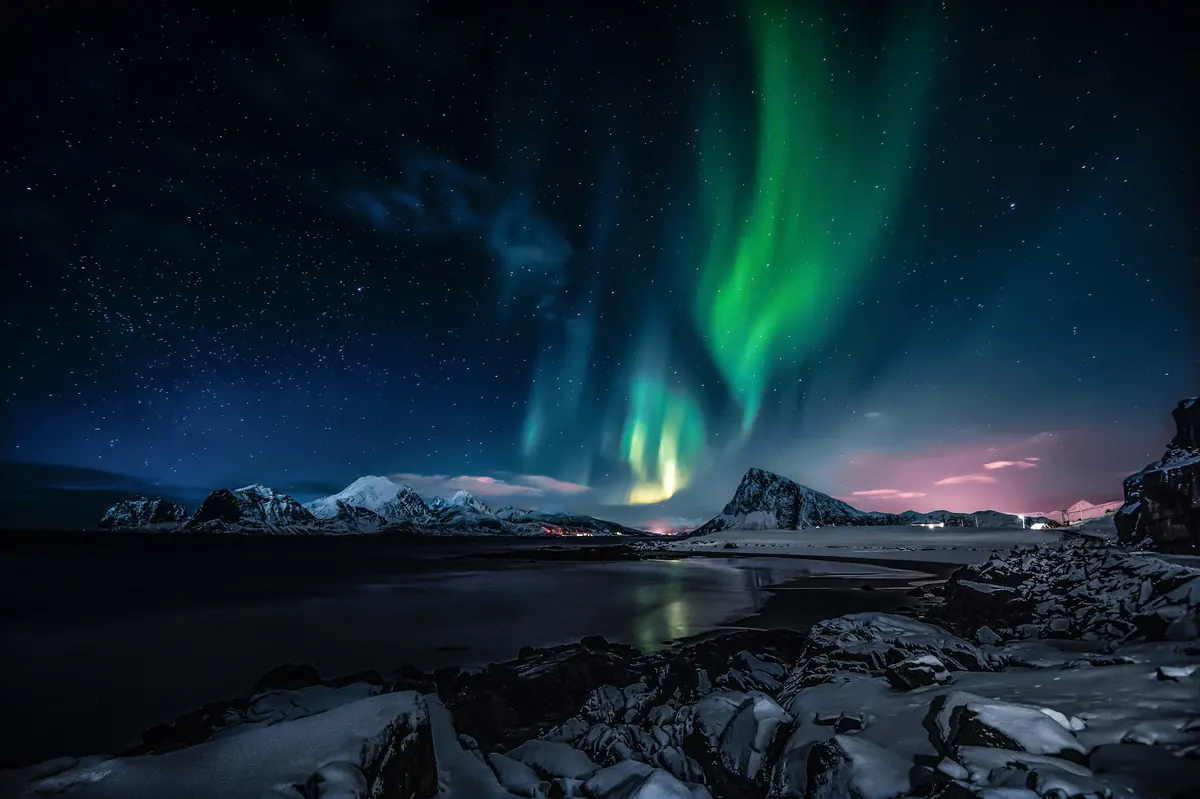
A first aurora is rarely the triumphant green curtain you had in mind. More often it is a pale grey smudge low over the northern horizon that you talk yourself out of for ten minutes, before it brightens into something that makes the cold worth it. Most failed aurora hunts in the UK fail for the same handful of reasons, and nearly all of them are avoidable. Here are the mistakes worth fixing before your next attempt.
Treating Kp as though it were a local forecast
Kp is the number everyone quotes, and it is the one that misleads most people. It is a planetary index, calculated in three-hour blocks from a network of mid-latitude observatories, so it describes the state of the whole Earth's magnetic field rather than the sky above your head. Two problems follow from that.
First, it lags. By the time Kp climbs to 6, the activity that pushed it there may already be fading. Second, it is blunt. A Kp of 5 can give Shetland a fine display and Norfolk nothing at all, because local geomagnetic latitude matters more than your position on a road atlas. Northern Scotland sits considerably further north geomagnetically than its geographic latitude suggests, and southern England sits further south.
Watch these instead, or at least alongside it:
- Bz — the north–south orientation of the interplanetary magnetic field. Sustained negative (southward) Bz couples energy into the magnetosphere and is the single most useful number to watch.
- Solar wind speed — anything much above the quiet background is encouraging, particularly if Bz is negative at the same time.
- Local magnetometers — readings from observatories closer to the UK show disturbance in real time, rather than averaging it away.
- Aurora oval forecasts — these show where the auroral oval sits, which is far more informative than a single global number.
As a rough rule of thumb, northern Scotland can see something at Kp 5, northern England around 6, and southern England needs 7 or more, which is uncommon. Treat those as guidance, not thresholds.
Ignoring cloud, or checking it badly
Cloud is the great killer. A Kp of 8 under overcast is worth nothing, and a Kp of 4 under a clear sky can still give you a memorable night. Yet plenty of people check a single percentage on a weather app and set off.
Look at satellite imagery rather than a cloud-cover figure. A loop showing the last few hours tells you which way gaps are moving, and whether a "mostly cloudy" forecast might still leave you a hole to work with. Check more than one source. Remember that the west coast of Scotland and the Welsh hills are cloudier than the east coast in many winter setups, and that valleys collect mist and fog that higher ground escapes. If you can drive twenty minutes uphill to get above a fog layer, that is often the difference between seeing the arc and seeing grey soup.
Misreading twilight and darkness
Aurora season in the UK runs roughly from late August to mid-April, and for good reason. Through June and much of July, northern Scotland never reaches astronomical darkness at all, and even further south the sky stays too bright for all but the strongest display.
At the shoulders of the season, the glow of twilight low to the north can look remarkably like a faint aurora. So can noctilucent clouds, which are silvery-blue and appear in summer twilight. Before you drive anywhere, check when astronomical darkness actually begins at your chosen latitude, and check the moon. A bright moon will wash out faint structure; a moonless night within a couple of hours of local midnight is the ideal window.
Choosing the wrong spot
You need a clear, unobstructed view to the north, with no light dome between you and the horizon. A town to your south is far less damaging than a town to your north. Scout your site in daylight first so you are not fumbling around in the dark, park somewhere safe and legal, and stay off private land. Altitude helps if it lifts you above low cloud, but a coastal spot with a clean northern sea horizon is often just as good.
Camera and viewing technique
Your eyes need twenty to thirty minutes to adapt, and one glance at a phone screen undoes much of that. Use a red torch, keep the brightness down, and look slightly to the side of faint features — averted vision picks up more than staring straight at them. A camera will often record colour and structure you cannot see directly, so do not dismiss a grey, ambiguous arc.
For the camera: tripod, manual mode, widest aperture you have, ISO around 1600–3200, and exposures of roughly five to fifteen seconds. Focus manually at infinity using live view on a bright star, and switch off image stabilisation. Take a test frame, check it, and adjust. Phones on a tripod with night mode can do surprisingly well.
Giving up too early
Aurora arrives in bursts. The sky can be empty for an hour, then a substorm brightens the arc within a minute or two. Local midnight and the hours after it are often the best part of the night, and plenty of people pack up at half eleven just before the show starts. Give it at least a full hour of genuine watching, and keep an eye on short-term data rather than a forecast issued three days earlier.
It also helps to know what you are not looking at:
- Noctilucent clouds — silvery, wavy, high in summer twilight.
- Light pillars and ice halos — vertical shafts above streetlights on very cold nights.
- Aircraft contrails, lens flare and dew on the lens.
- A dull green glow from a sports pitch or greenhouse, which does not move.
A short routine before you go
Check Bz and solar wind speed rather than Kp alone. Read the satellite cloud loop for the next few hours. Confirm when darkness falls and where the moon will be. Pick a dark, north-facing site you already know. Then take layers, a flask, a red torch and a fully charged phone, and tell someone where you are going.
Once you are there, let your eyes settle, look north and low, and be patient. The UK will never be Iceland, but it does deliver — usually on the nights when you nearly stayed at home.
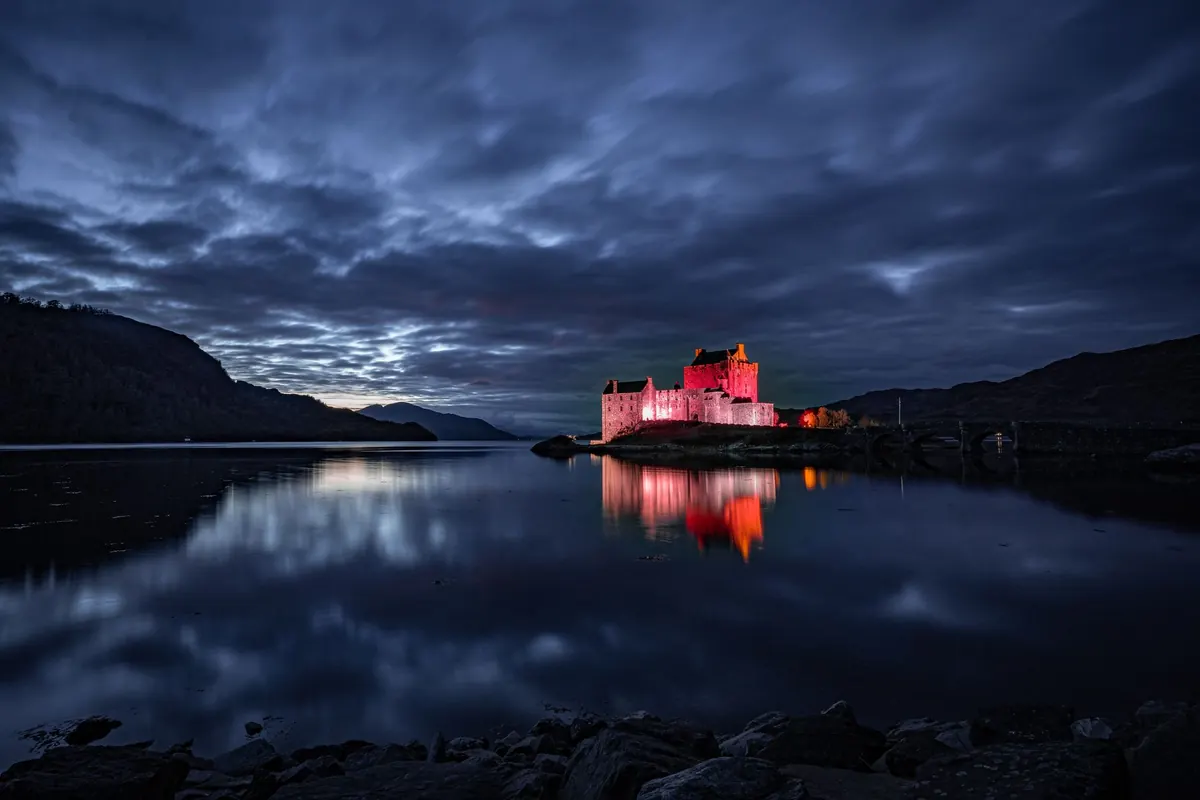
Photo: stein egil liland / Pexels