The aurora that stays with you is rarely the one you photographed best. More often it is the one you can still describe months later: the time, the colour, the way a quiet arc along the northern horizon suddenly broke into rays. Writing that down takes two minutes and repays you for years. A simple observation log also turns a hobby into something you can genuinely learn from. After one season of notes you will know which wind directions bring you clear skies, what level of geomagnetic activity produces anything where you live, and how fast your camera battery dies in the cold.
Why a written log beats memory
Memory is generous and unreliable in equal measure. You remember the spectacular night and forget the four quiet ones that came before it, which is exactly the wrong way round. The quiet nights tell you what does not work: which forecast values looked promising but delivered nothing, which observing spot has a streetlight bleeding into the northern sky, which month is a write-off for cloud.
Notes also make comparisons possible. Two aurora reports from the same village, six weeks apart, are far more useful than two vague recollections. When you photograph a display, the log gives the picture context — exposure settings, sky brightness, how much of what you saw actually reached the sensor.
What belongs in a simple log
You do not need much. Four groups of information cover almost everything worth knowing.
- Time and place. Date, and times in Universal Time (UT, which is the same as GMT), with local time in brackets if that helps you. Nearest town, approximate latitude and longitude, and where you were standing — garden, layby, hilltop.
- The aurora itself. Where it appeared in the sky, its colour, its form (arc, band, rays, corona), how bright it was against a marker you trust, how long it lasted and whether it moved or pulsed.
- The sky and the weather. Cloud cover in eighths (oktas), haze, moonlight, how dark the site really is, and anything blocking your northern horizon. Note temperature too; it affects both you and your batteries.
- Solar and geomagnetic context. The Kp figure at the time, solar wind speed, the north–south direction of the magnetic field (Bz), and whether forecasters were talking about a coronal hole stream or a coronal mass ejection.
- Equipment. Camera, lens, aperture, ISO, shutter speed, tripod, binoculars, spare batteries, dew heater. Add anything that failed, and why.
Finish each entry with a line of free notes. Satellite flares, odd afterimages, a fox barking in the field behind you — small details jog the memory later.
Paper, spreadsheet or notebook app?
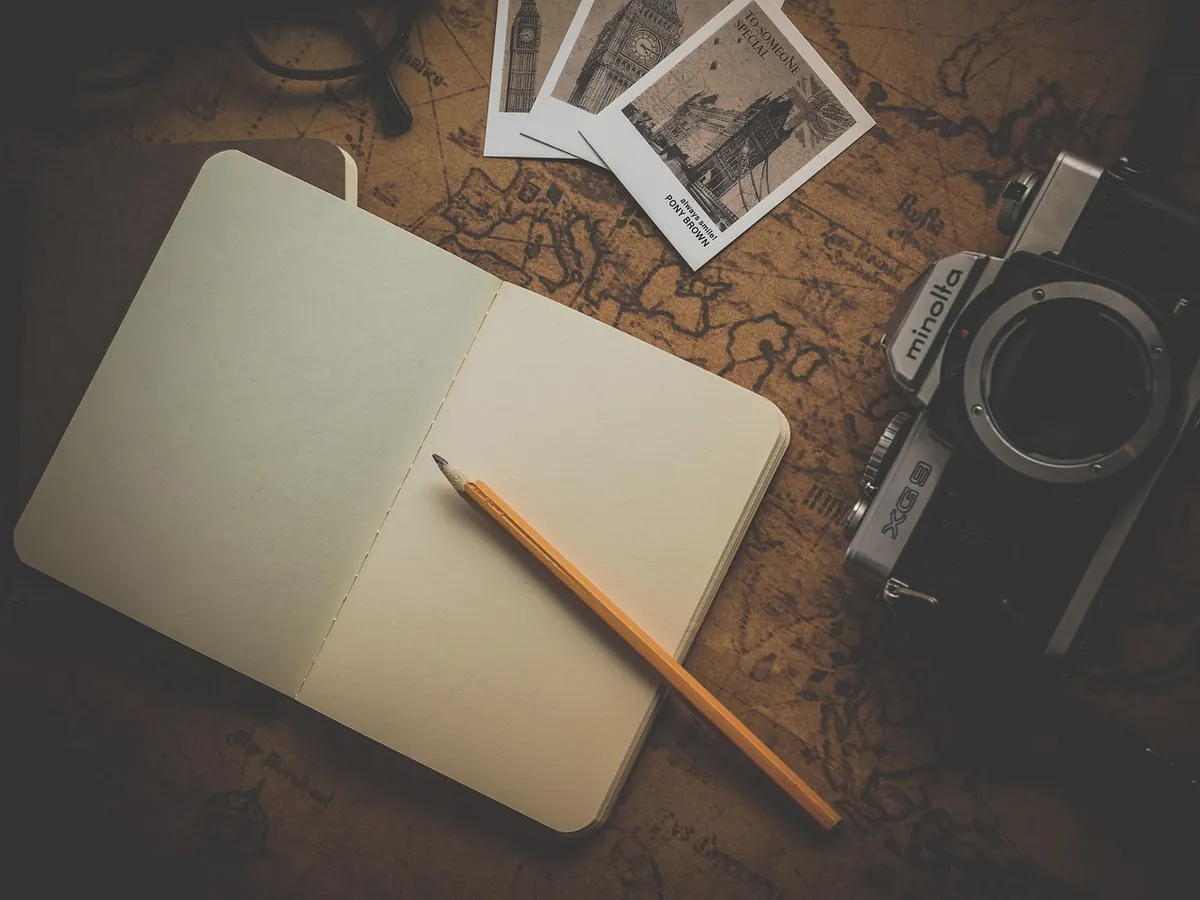
Whichever you will actually use at two in the morning with cold hands. A small A5 notebook and a pencil lives happily in a camera bag, and pencil works when a pen has given up in the damp. A spreadsheet is better if you want to sort and compare: one row per session, one column per field, and a notes column at the end. Phone notes apps are fine, though a bright screen wrecks your dark adaptation, so keep the brightness down and the delay short.
Voice memos are a reasonable compromise. Speak the essentials while you watch, then write them up properly the next day.
A routine for the night itself
Before you go out
Check the forecast, note the predicted Kp, the solar wind numbers and the moon's rise and set times. Write those lines into the log before you leave the house, so nothing has to be typed in the dark.
While you are watching
Jot a short entry every fifteen to thirty minutes, and an extra one whenever the display changes character. Times matter more than adjectives. A line such as "22:40 UT, arc brightening, rays forming above the arc, green with a faint red edge" is worth more than a paragraph of enthusiasm.
The morning after
Fill in the gaps while it is fresh: the observed Kp, what you would do differently, whether the site is worth returning to. Five minutes here saves you a season of guessing.
Adding solar and geomagnetic context
You do not need to become a forecaster. Recording three or four numbers alongside your sighting is enough to spot patterns later. Space weather agencies publish the Kp index, solar wind speed and the Bz component in near real time, and UK magnetic observatory data is available for those who want a local view.
One rule: record the values as they stood at the time of your observation, not the ones you saw the following afternoon. A log that quietly absorbs better data than you had is no longer a record of anything.
Mistakes that make a log useless
- Recording only the good nights.
- Writing "bright" or "faint" with nothing to compare it against. Pick a reference — a familiar star, a previous display — and stick with it.
- Using local time without saying so, then comparing the entry with a UT-based forecast.
- Back-filling numbers from a later report.
- Writing long prose when a short table row would do.
- Never reading it back.
That last point is the quiet killer. A log you never open is just a diary. Ten minutes at the end of each month, reading through and looking for repeats, is where the value appears.
Start with ten lines and keep going
A useful log does not need to be beautiful or complete. Aim for ten lines per session: time, place, sky, what you saw, what you used. Do that for a winter and you will have something genuinely yours — a record of your own patch of sky, and a much better idea of when it is worth putting your boots on.
Photo: DariuszSankowski / Pixabay